How much does polished concrete cost per square foot in Knoxville, TN?+
Polished concrete in the Knoxville metro typically runs $3–$12 per square foot installed. Residential floors usually land between $4–$8 per square foot, while commercial projects can dip to $3–$5 per square foot on large, clean slabs. The grind level drives most of the price difference: a matte or satin finish (200–400 grit) sits at the low end, a satin-to-semi-gloss (800 grit) sits mid-range, and a high-gloss mirror finish (1500–3000 grit with aggregate exposure) reaches $8–$12 per square foot. We deliver a written per-square-foot price after an on-site estimate.
Is polished concrete cheaper than epoxy flooring or hardwood?+
In most Knoxville homes and businesses, polished concrete is cheaper than hardwood and comparable to or slightly less than a premium epoxy system. Polished concrete runs about $3–$12 per square foot installed, epoxy coatings $4–$12 per square foot, and installed hardwood $8–$20+ per square foot. Polished concrete also avoids the ongoing refinishing and recoating costs that hardwood and epoxy carry, so the lifetime cost is usually the lowest of the three.
What factors increase the cost of concrete polishing or epoxy application?+
The biggest cost adders are slab repair, moisture mitigation, and diamond grinding prep. Cracks, spalls, and uneven slabs must be patched or leveled before finishing; oil-stained or contaminated concrete requires deeper grinding; and slabs with high moisture vapor pressure may need a moisture-mitigation system before epoxy will bond. Other adders include small square footage (minimum charges), heavy aggregate exposure, decorative dyes and stains, cove base installation, and after-hours or phased commercial scheduling. We itemize every one of these on your written estimate.
Is polished concrete slippery when wet?+
A high-gloss polished floor can be slick when wet, but slip resistance is controllable. We can stop at a lower grit (400–800) for more traction, apply an anti-slip densifier guard, or add grit additive to the topcoat on epoxy systems. For commercial kitchens, entries, restrooms, and other wet zones we specify finishes that meet OSHA-compliant traction standards. Outdoors or in wet areas, a satin finish with anti-slip treatment is the safer choice over a full mirror polish.
How long do polished concrete floors and garage epoxy coatings last?+
With minimal maintenance, polished concrete floors commonly deliver 20+ years of service in residential settings and 10–20 years in heavy-traffic commercial environments before a refresh burnish is needed — there is no coating to peel or wear off. A properly installed garage epoxy system with the right prep and polyaspartic or urethane topcoat typically lasts 10–20+ years under normal use. Both systems far outlast DIY epoxy kits, which often fail within 1–3 years.
Can you polish old, cracked, or uneven concrete slabs?+
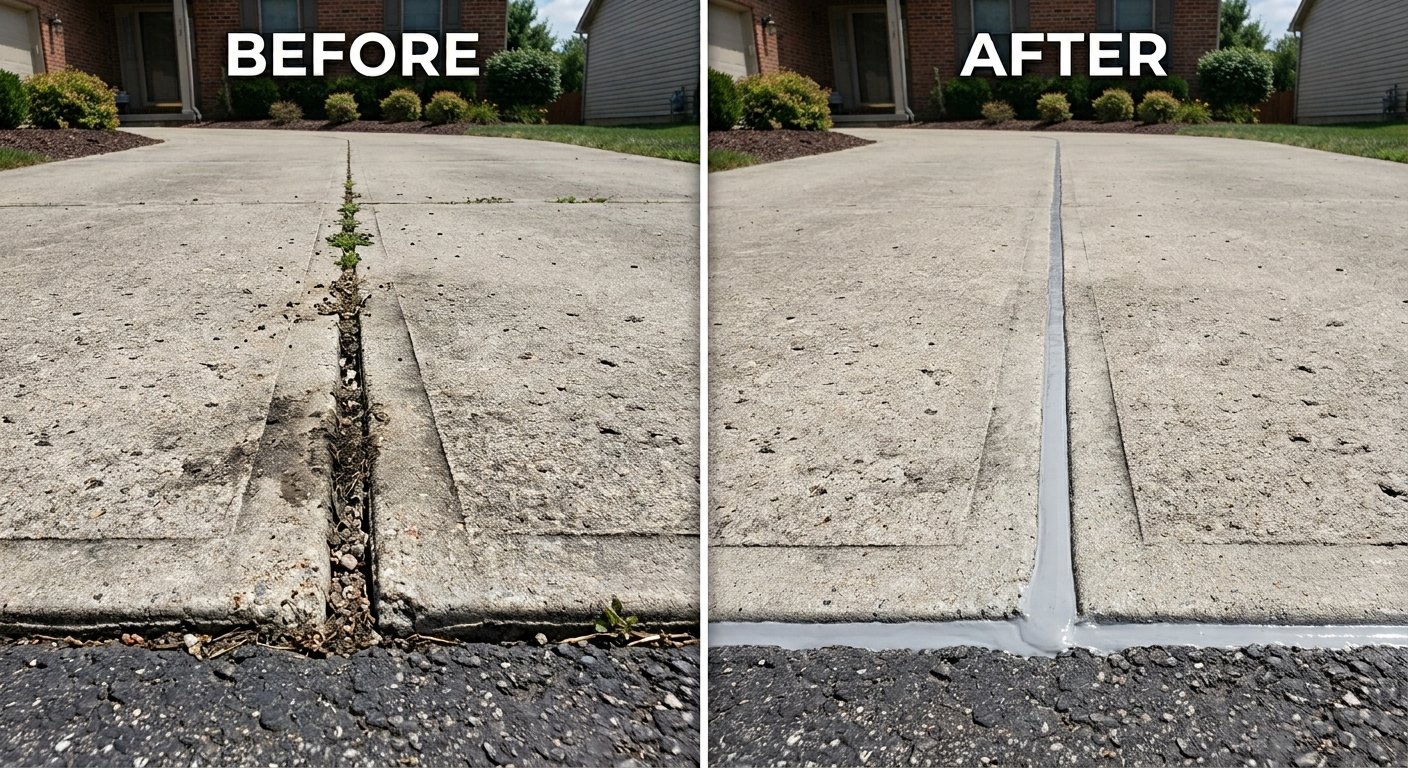
Yes. Older, cracked, or uneven slabs are common candidates, but they require prep before grinding. We fill cracks and control joints with polyurea or semi-rigid joint filler, patch spalls and popouts with a concrete repair mortar, and address birdbaths or high spots with targeted grinding or leveling. Once the slab is sound and flat, we diamond-polish through the grit sequence as normal. Some hairline cracks remain visible as character; larger structural issues are flagged before we start so you know what to expect.
How long does the polishing or epoxy coating process take?+
A typical residential project (400–600 sq ft garage or basement) takes 1–2 days for polished concrete and 1–3 days for epoxy, including prep, coating, and cure. Commercial spaces of 2,000+ sq ft usually take 3–5 days depending on slab condition, finish level, and whether the work is phased around your operating hours. Polished concrete has no long cure time; epoxy needs 12–24 hours before light foot traffic and up to 48 hours before vehicle traffic.
How soon can I walk or park my car on newly finished floors?+
For polished concrete, light foot traffic is usually possible the same day the final grit is complete — full furniture and rugs can go back within 24 hours. For epoxy and polyaspartic garage coatings, light foot traffic is typically safe within 12 hours and vehicle traffic within 48 hours, depending on product, temperature, and humidity. We give you exact walk-on and drive-on times for your specific system before we leave the job.
How do I properly clean and maintain polished concrete or garage epoxy?+
Dust mop or auto-scrub regularly and clean with a neutral pH cleaner — never acidic, citrus, or solvent degreasers, which etch polished concrete and dull epoxy topcoats. Blot spills promptly, avoid abrasive pads and power scrubbers, and place walk-off mats at entries to trap grit. For high-gloss polished floors, reapply a burnishing guard once a year; for epoxy, a clear re-topcoat every several years keeps it fresh. No waxing, stripping, or recoating is required for polished concrete.
Do you offer commercial, industrial, and residential concrete polishing in Knox County?+
Yes. We install commercial, industrial, and residential polished concrete and epoxy coatings throughout Knox County and the greater Knoxville metro — including Knoxville, Farragut, Powell, Maryville, Oak Ridge, Clinton, Alcoa, and surrounding areas in Anderson and Blount counties. Our in-house crews handle everything from single-car residential garages to 8,000+ sq ft warehouses, retail stores, restaurants, and manufacturing facilities. Every estimate is free and on-site.
Are your coatings resistant to garage oil spills, chemicals, and East Tennessee freeze-thaw cycles?+
Yes. Our high-solids epoxy and polyaspartic systems are engineered to resist motor oil, hydraulic fluid, road salt, solvents, and common shop chemicals — blot spills promptly and they will not stain or lift the coating. The seamless, non-porous surface also stands up to East Tennessee freeze-thaw cycling because there is no porous surface for moisture to enter and expand. For heavier chemical exposure we specify novolac or vinyl ester systems. Proper mechanical prep is what keeps the coating bonded through seasonal temperature swings.